Dubbed the Terrible Twins for its butt-kicking steps, this trek past Twin Peaks and Violet Hill is dubbed “very difficult” by the AFCD . It gives any stair-climber machine a run for its money.
The two to three hour hike is hard work but the rewards are worth it. You get incredible views of outlying islands, fairytale woodlands and the concrete jungle.
How to get there
Public transport: Buses 6 and 66 (from Exchange Square) both go up to Parkview (at Tai Tam Reservoir Road bus stop). Taxi: Ask to go to Parkview at Tai Tam Reservoir Road bus stop, most taxi drivers are familiar with the starting point.
The starting point is signposted by a trail map and a set of stairs leading into the woods adjacent to Parkview. Follow them up to Twin Peaks and Violet Hill. The trail finishes on Stanley Gap Road at the Wilson Trail bus stop. Then you can catch a bus or taxi into Stanley.
The route starts at the first stage of the 78km Wilson Trail across Hong Kong. From Stanley Gap Road, between Repulse Bay and Stanley, enter Tai Tam Country Park. Then you can set off up the infamous “Thousand Steps”.
As you go up up, the landscape changes from pavement to a rocky dirt path engulfed by trees. The sun disappears behind the greenery, and the climb steepens before reaching the first peak.
Take regular breaks to take in the splendid view of Stanley’s colourful architecture. You might catch glimpses of sailboats scudding across the South China Sea too.
With the Thousand Steps conquered (if your legs have not turned to jello), hoof it down the first hill. Another rocky uphill path awaits.
Gruelling as it may seem, arriving at the second summit is a field day for your camera’s panorama feature. You can capture the lush green peaks, views of the Southside, and the Wong Nai Chung reservoir ahead. The hardest part is over.
From here, descend to Tsin Shui Wan Au, a junction crowded with hikers taking a breather. Continue to Violet Hill, a 433-metre peak which feels like a cakewalk in comparison.
After winding around flowery meadows for about 1km, Hong Kong’s skyline and Parkview come into view. At this point, the sight couldn’t be more welcomed.
Once you see public bathrooms and the Wong Nai Chung reservoir, you can get your much-needed break and stretch. Whether you catch a bus from Wong Nai Chung Gap or continue hiking, give yourself a pat on the back. Finally, you conquered one of Hong Kong’s most notorious treks.
Author: Katrina Lau
Source: https://hongkongliving.com/
Link: https://hongkongliving.com/camping-spots-hong-kong/
While an oversea vacation may not happen anytime soon, camping in the countryside might be your best option for a relaxing getaway for now. We’ve screened through all the choices out there and put together a list of campsites with fresh water supply, great stretch of space and even scenic views. Grab your tents and spend some quality time with family and friends at these idyllic camping spots – getting in touch with Mother Nature is just one ride away.
Located on the eastern coast, Sai Kung’s Tai Long Wan is home to four beautiful beaches, one being Sai Wan. This campsite is popular for families and friends, especially during the weekends. Easily accessible via MacLehose Trail Stage 2, Sai Wan is also close to the Sheung Luk Stream and Sai Wan Stargazing Site.
How to get there: From Sai Kung Town Centre, take a taxi or minibus 29R to Sai Wan Pavilion. Follow the track down MacLehose Trail Stage 2 and you’ll reach the campsite in about 40 minutes.
Crowned as a hidden gem also in Sai Kung’s Tai Long Wan, Ham Tin is also a camping favourite. Boasting white soft sand and gentle waves, the beach also has its own tuck shop that offers food and drinks. Though the beach takes a decent hike to reach, the scenes of sunrise and sunset at the beachfront are totally worth it. Don’t worry about carrying your gears all the way, tents and sleeping bags are also available for rental.
How to get there: From Sai Kung Town Centre, take bus 94 for Wong Shek Pier and alight at Pak Tam Au. Follow the track down MacLehose Trail Stage 2 and you’ll reach the campsite in about 75 minutes. Alternatively, you can take a speedboat from Sai Kung Pier.
Here we are at the third beach of Tai Long Wan. Just as its neighbours, Long Ke Wan also boasts crystal clear waters and fine sand. While the long stretch of white sand is very inviting, you can also pitch your tent in the grass field behind the beach. With fire pits nearby, throw a barbecue and enjoy the dazzling night sky with no skyscrapers in sight.
How to get there: From Sai Kung Town Centre, take a taxi to High Island Reservoir and follow the signs along the hike for Long Ke Beach. Alternatively, you can take a speedboat from Sai Kung Pier.
If camping at the beach is not your thing, consider this campsite in Sai Kung. Tucked away in Hoi Ha Wan, Wan Tsai Peninsula holds a large expanse of greens, overlooking the blue waters. Although it takes a bit more effort to get there, the campsite is well-equipped with hygienic facilities, barbecue pits, benches and tables. Note that there are two separate campsites: Wan Tsai West Campsite and Wan Tsai South Campsite, both accessible via the Wan Tsai Nature Trail.
How to get there: From Wong Shek Pier, take the Wan Tsai-bound ferry. Once you’ve arrived at Wan Tsai Pier, follow the stony path and you will reach the campsite in five minutes. Alternatively, you can take green minibus 7 from Sai Kung to Hoi Ha Village, follow the Tai Tan Country Trail and you will arrive at the campsite in around 45 minutes.
Just a walk from Wong Shek Pier, Tai Tan campsite is another perfect spot for camping amateurs. With a spacious field on the hillside, this camp site has basic amenities like barbecue pits and washrooms. If you’re up for a hike, follow the Tai Tan Country Trail for scenic views of Long Harbour. For a brisk walk, go with the Tai Tan Tree Walk which also features 18 tree species along the path.
How to get there: Take bus 94 from Sai Kung Bus Terminal for Wong Shek and get off at Tai Tan bus stop.
Located in Pat Sin Leng Country Park, Hok Tau Reservoir spans across Tan Shan River. Surrounded by three hiking trails, the campsite features a picturesque environment with lush greeneries and fresh water streams. After setting up your tent, take a walk to witness the magnificent dam and emerald waters. For hiking buffs, challenge yourselves to Ping Fung Shan and Pat Sin Leng.
How to get there: Take green minibus 52B from Fanling MTR Station and alight at Hok Tau Tsun Terminus. Walk along the road for Hok Tau Reservoir and you will reach the campsite in about 15 minutes.
Situated on the south of Lantau Island, Nam Shan holds an extensive stretch of grassland. Its barbecue area is also the biggest in Lantau Country Park which can accommodate up to a hundred people. The tranquil yet accessible area is also just a walk away from the Nam Shan viewing point. There you’ll find sweeping views of Mui Wo and Pui O Bay.
How to get there: Take bus 3M from Tung Chung Town Centre and alight at Nam Shan station.
Also known as Grass Island, Tap Mun is filled with green meadows and friendly cows. After a breezy ferry ride, you’ll arrive at the secluded seaside neighbourhood of Tap Mun. Set right next to the shore, the campsite attracts campers and picnic-goers alike. When night descends, enjoy stargazing while listening to the splashing waves against the cliff. As a fishermen village, Tap Mun is also home to seafood restaurants and local stores so you don’t have to worry about food supplies.
How to get there: Ferries leave from Wong Shek Pier and Ma Liu Shui Ferry Pier.
Managed by LCSD, Pui O Campsite is equipped with 54 camp bays, barbecue pits and changing rooms. As the campsite sits right next to Pui O Beach, campers can enjoy a beach day while smoking up some s’mores on the site’s free barbecue pits. Applications for camp bays are available on-site, but do note that advance booking is needed during Chinese New Year holidays, Labour Day and National Day.
How to get there: Take bus 3M or A35 from Tung Chung Town Centre and alight at Bui O Public School.
Drone photos and videos are amazing, aren’t they? As intimidating as it may seem, flying a drone is easier than you think. The hard part here is to play by the rules and not get yourself into trouble. Luckily, we’ve done the work for you and summarised all the things you need to know before taking your drone out for a tour around town.
You should never fly your drone over populated and congested areas. On top of that, your drone should not be flown over, or close to, any object, installation or facility that would present a risk to safety in the event of damage due to any impact caused by the drone.
The drone should also not be flown near an airport and aircraft approach and take-off paths, which include:
Areas within 5km of Hong Kong International Airport
North Lantau coastal area
Coastal areas from Tai Lam Chung to Tsuen Wan and Tsing Yi Island
Victoria Harbour and its coastal areas
Shek Kong area
What areas are good for flying?
A wide expanse of clear space is ideal and safe. It is a no brainer that you should always maintain visual contact with the drone at all times while in flight. Before setting off to your destination, make sure the area is:
Clear of vessels, vehicles or structures
Away from helicopter landing pads
Clear of any power sources such as power lines, transformer stations, pylons, and transmitter towers, which might cause radio interference
It can be tempting to fly your drone high and catch scenic views like no other, but to ensure your little aircraft won’t get in the way of air traffic, you should not fly your drone more than 300 feet, which is around 90 metres, above ground level.
When can I fly my drone?
You can only fly your drone during daytime. Just like doing any outdoor activities, you should check weather conditions before heading out. Drones should only be operated under good visibility and weather conditions. If there is a rainstorm warning, tropical cyclone warning or strong monsoon signal in effect, you should keep your drone at home and leave it for your next voyage.
Is there any weight limit for my drone?
If you’re flying just for fun and that your drone weighs less than 7kg excluding the fuel, there’s no need to acquire permission. However, if the drone is flying for a commercial purpose, or if it exceeds 7kg excluding the fuel, you are required to submit an application to the Hong Kong Civil Aviation Department (HKCAD).
Anything else?
Whenever you’re taking the drone out for a flight, you should be on site and keep the drone within Visual Line of Sight (VLOS). Operating within VLOS means that you are able to maintain direct, unaided (other than corrective lenses) visual contact with the drone, and are able to monitor the flight path in relation to other aircraft, vessels, vehicles and structures to avoid any collisions.
It is also important to always check on your aircraft before flying to ensure safe and smooth flying. Make sure to perform a safety check on your drone, including fuel levels or lithium batteries before touring around the city.
Founded in 2006, DJI is the most heard name in the drone world. The futuristic brand features gears that cater different level of pilots, from consumer to professional usages. There you’ll find big names like its Phantom, Mavic and Spark Series, which include compact and portable drones with unbeatable image quality. Besides paying a visit to the DJI flagship store in Hong Kong, you can also find its products in Fortress.
FlyCamHK has a strong background of providing UAS solutions and trainings to its clients. Its retail shop offers one-stop aerial equipment and technical support services, featuring world-known brand names and even gears at discounted prices. Its technical team of experienced and certified drone pilots can cater to the needs of all aerial enthusiasts, from entry to professional level.
FlyCamHK, Unit D, 15/F, V GA Building, 532 Castle Peak Road, Lai Chi Kok, 3741 2006
Apple
For a quick fix, you can also visit Apple store for drones and accessories. Though the variety is limited and only includes DJI products, you can get a drone with just about a thousand dollars. Visit its online store or drop by the closest outlet for more details.
Author: Katrina Lau
Source: https://hongkongliving.com/
Link: https://hongkongliving.com/waterfall-hikes-hong-kong/
|
It’s that time of the year again when we flock to hiking trails and country parks. If Hong Kong’s heat feels discouraging, though, these waterfall hikes might answer your calls. Tucked away in secluded hillsides, tackle these trails and treat yourself to breathtaking views and a cooling dip.
The waterfall’s name may have come from a haunted story, but the stunning sight says otherwise. If Bride’s Pool Nature Trail is too easy for you, follow Pat Sin Leng Nature Trail which overlooks the Tolo Harbour and Plover Cove Reservoir. The base pool is a popular swimming area in the summer months, so go early to avoid the crowd.
How to get there: Take the MTR to Tai Po Market Station, then take green minibus 20C for Tai Mei Tuk
Ng Tung Chai Waterfalls
If you’re a hiking buff and a nature lover, Ng Tung Chai Falls ticks all the boxes. Boasting an impressive series of waterfalls, the hike at Ng Tung Chai is located at Hong Kong’s highest summit, Tai Mo Shan. The hike is about three hours and it may not be the most gentle path. You’ll be rewarded with the raw beauty of Scatter Fall and the swim after a gruelling climb.
How to get there: Take the MTR to Tai Wo Station, then take bus 64K for Yuen Long
Ma Dai Streams
Ma Dai Stream is one of the less throttled spots in Hong Kong. The crystal clear pools and clean waters are hidden behind the rugged cliffs and lush wilderness of Ma On Shan Country Park. Grab your gear and get your hands ready for some climbing action as the hike is on the steeper side. This waterfall hike is also one of the favourites for canyoning fans.
How to get there: Take the MTR to Tai Shui Hang Station and head out at exit B
Ping Nam Stream
The Ping Nam Waterfall hike is for both experienced and amateur trekkers. Catch the Hula-skirt Waterfall at the base where water is clear and inviting, perfect for a post-hike dip. If you’re more of an adventurer, you can continue upwards to the main falls. Scramble up the rocks and take a plunge.
How to get there: Take the MTR to Fanling Station, then take bus 78K or minibus 56K
Silvermine Waterfalls
The Silvermine Falls is for those who are looking for something more laidback. Cut off from the city, this hidden gem on East Lantau offers an easy stroll down Olympic Trail, taking you to three picturesque waterfalls. The hike covers beaches, rural villages and historical temples, so be prepared to spend a day at Mui Wo and recover at one of its beachside bars after the hike.
How to get there: Ferries leave from Central Ferry Pier 6 every 40 minutes
Sheung Luk Stream
You’ve probably seen Sheung Luk Stream all over Instagram. This rock-pool near Tai Long Wan in Sai Kung is one of a favourite amongst Hong Kongers. As summer approaches, you can catch people jumping into the turquoise waters under its collection of waterfalls or picnicking on the side rocks. Hike down Sai Wan Pavillion to reach the stream.
How to get there: Take minibus 29R or a taxi from Sai Kung Town to Sai Wan Pavillion
Tai Tam Mound
Back on southside, Tai Tam Mound waterfall is right next to Tai Tam Reservoir. Soothe yourself with the cool and calming waters after a brief hike – you know the water is clean when you see fish swimming around. This is the perfect spot to get your dose of zen.
How to get there: Take the MTR to Chai Wan Station, then take minibus 16M or 16X
Yellow Dragon Stream
Catch gushing waters at the Wong Lung Hang waterfall hike after a good week of rainfall. Located near Tung Chung, Wong Lung – which means Yellow Dragon – the hike is packed with scenic views and you’ll find yourself surrounded by multiple waterfalls. Trek along the Wong Lung Hang Trail and you’ll be greeted by Yellow Dragon Waterfall first, then continue to find Left Dragon, Right Dragon and the Dragon Tail Waterfall.
How to get there: Take the MTR to Tung Chung Station and head out at exit A
If you’re up for a challenge, this hike over four peaks is no walk in the park and demands a good level of fitness and experience. Climb your way over Pyramid Hill, Ma On Shan, the Hunch Backs and Tiu Shau Ngam to mountainous terrain and spectacular views over Sai Kung and its outlying islands. Traversing along the narrow ridges of the mountaintops, you’ll feel like you’re on top of the world!
Getting there
Take minibus No.3 from Yi Chun Street, opposite Sai Kung Wet Market, to Po Le Che, alighting at the crossroads with Tan Cheung and Pak Kong Au roads. Walk up Pak Kong Au Road for approximately 550 metres, past the public toilets to a refuse collection point and an inconspicuous path marked “行山”, which translates to “hiking”. Alternatively, you can ride a taxi all the way to the start by telling the driver you want to head into Tai Shui Tseng.
Follow the path up a flight of concrete steps to the Ma On Shan Country Trail. Ignore the first dirt trail off the path and continue towards the marked path to Ngong Ping. After about 200 metres the steps are replaced by a rather challenging dirt trail with scattered uneven rocks. Eventually, it intersects with section four of the MacLehose Trail at a fork marked by an information board. Take the path on the right for the short walk to Ngong Ping.
A perfect spot for a picnic, Ngong Ping is a vast grassy plateau with incredible panoramas of Sai Kung and Port Shelter. To begin your ascend to Pyramid Hill, cross the plateau. Detour from the MacLehose Trail and take the path on the right, near the edge of Ngong Ping, and climb Pyramid Hill.
Take a moment at Pyramid Hill
The summit of Pyramid Hill is a sea of Chinese silver grass during autumn and winter with a breathtaking view over Sai Kung and the Ngong Ping plateau. Your next challenge is to continue down Pyramid Hill, leaving the MacLehose Trail to reach up to saddle-shaped Ma On Shan. To the left, there’s a view over the wild mountains of Ma On Shan Country Park stretching into the distance; to the right, Three Fathoms Cover emerges from behind the mountain.
Arrive at Ma On Shan
It’s a steep scramble to the summit, but you’ll be rewarded with an unobstructed 360-degree view of Tolo Harbour, Three Fathoms Cove and Port Shelter, and ahead of the saddle to the slightly lower peak of the Hunch Backs. This is a great time to take a break. At night, Ma On Shan’s streetlights offers a whole new perspective for experienced hikers equipped with head torches.
Getting back
Follow the trail to a junction with two red warning signs: take the left fork, which joins the Ma On Shan Family Walk to the finishing point at Ma On Shan barbecue site. From there, it’s another hour’s walk to the MTR stations, or catch the village bus NR84 shuttle which runs to Ma On Shan MTR station.
Author: Eric Ho
Source: https://hongkongliving.com/
Link: https://hongkongliving.com/hike-pyramid-hill-hunch-backs/
Instagram Pier, Dragon’s Back, The Peak, Quarry Bay’s Monster Building…the list goes on. These Instagrammable locations are the most talked about in the city, but where are the ones you haven’t discovered yet?
If you’re looking to step up your feed after you’ve hit all the well-known spots, then you’ll want to mark these locations down:
One of the highest peaks in Hong Kong, Tai Mo Shan is proven to be a fairly difficult hike. With an elevation of 957 metres, this mountain is one of the mistiest areas in Hong Kong (Tai Mo directly translates to “super foggy” in English). Once you’ve reached the top, your shots will look as though you’re literally amongst the clouds.
Tip: There are also over 1,500 species of plants recorded on Tai Mo Shan, so even if you don’t reach the top, you’re sure to find great scenery to shoot along the way.
A renowned tourist attraction, the Jumbo Kingdom is no stranger to both local and international crowds. However, with a large number of modern spots emerging, the desire to visit this magnificent Hong Kong icon is often put on the back-burner for many. Established in October 1976, give your feed a little throwback with Jumbo Kingdom’s Chinese imperial palace-inspired architecture.
Tip: Make sure to visit its recently revamped Jumbo Floating Restaurant, a favourite amongst celebrities and Hong Kong society members.
South Perimeter Road in Chek Lap Kok, near the Airfield Ground Maintenance Building, is notably one of the best locations to catch flights jetting off towards the sunset (or sunrise for the early birds). A romantic spot and a favourite amongst photographers, capture the cotton candy-like ombre sky at its most stunning hour during twilight.
Tip: Be extra cautious if you plan to take your shot in the middle of the road, as cars are often known to speed around the curve.
South Perimeter Road, Chek Lap Kok, Lantau Island
Photo: Courtesy of @and929
4. Sharp Peak
Also known as Nam She Tsim, Sharp Peak’s hills are just as its name describes—sharp. Located within the Sai Kung East Country Park, the hike is reasonably difficult with its steep slopes. However, the view at the end and the photos that come with it make the trek worth it. With an overview of a snake-like trail, frame your shot so you can see the hills line up as far as the eye can see.
Tip: As the trail is not a smoothly paved track, make sure to go on a sunny and bright day for an easier climb.
Purely for your feed’s aesthetic purposes, Lok Wah Estate proves that Hong Kong architecture is as artistic and creative as they come. A regular estate located in Kwun Tong, this spot creates the illusion of infinite loops.
Tip: Make sure to time your shot according to the sun’s position. When the light hits the bars at just the right angle, you’ll be able to play with the shadow for a more artsy shot.
Lok Wah Estate, 70 Chun Wah Rd, Ngau Tau Kok
Photo: Courtesy of @kkit810
6. Lau Shui Heung Reservoir
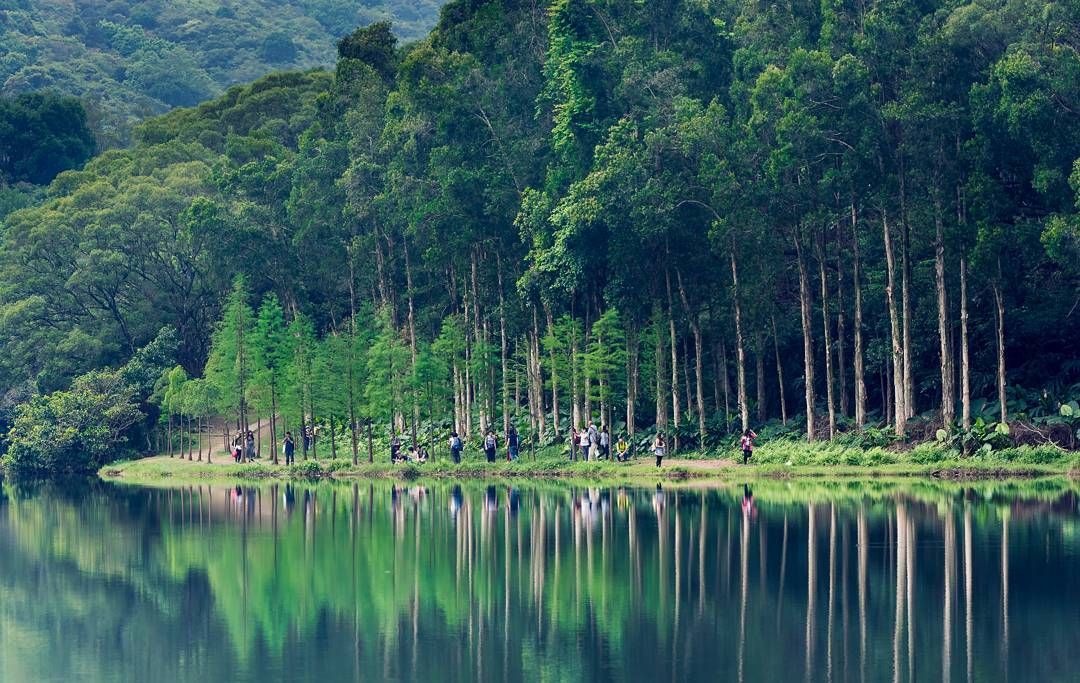
Located in the new territories, Lau Shui Heung Reservoir is one of many reservoirs in Hong Kong. With its serene surroundings and abundance of lush greenery, there are many opportunities in the area for a photoshoot. When the light hits the water, the reservoir creates a mirror-like reflection as seen above.
Tip: There are barbeque facilities nearby, which is perfect if you want to transition from your photoshoot to a family-friendly gathering.
A cape south of Shek O and d’Aguilar Peak, Cape d’Aguilar has all of the aesthetic props and structures you need for an amazing shot. From a lighthouse on top of a hill to a replica whale skeleton and a mock shrine, you’ll be able to fit a few good shots from just one trip to this locale.
Tip: With many caves and rock formations, make sure to visit this area on a sunny day and be extra cautious when exploring the area.
This place will have you and your Instagram followers wondering if you’re still in Hong Kong. As one of the city’s farthest islands, Tung Ping Chau is a Hong Kong UNESCO Global Geopark. With its natural geological rock formations and clear blue water, there are lots to do and see on the island, making it perfect for a day trip.
Tip: Because of its distant location from Hong Kong, the sunset and sunrise are exceptionally gorgeous as you look out towards the South China Sea.
Why fly to Singapore‘s Marina Bay Sands infinity pool when you can take a hike and find serenity in Hong Kong’s very own Man Cheung Po? Although the area is now “closed” for swimming (hikers may be fined for taking a dip), this shouldn’t stop you from framing an Insta-worthy shot.
Tip: The hike from Tai O has paved trails that decrease the path’s difficulty, but there are still a few boulders you will have to climb over so be sure to go on a dry day to avoid slipping on wet rocks.
Hong Kong may not have cherry blossoms, but these Pink Poui flowers are close enough. Near Kwai Fong Estate, although there are only two to three of the rosy trumpet trees, this spot is a favourite amongst flower photographers. With a life expectancy of 10 days, make sure to visit around Spring time to catch the flowers at its full blossom.
Tip: As this is near an estate, be sure to be respectful and not disrupt the local residential area.
In its earliest days, Hong Kong was a series of small communities subsisting on the land and living inside walled villages, and if you travel up into the New Territories you’ll discover traditional life still exists behind these walls. In fact, you don’t need to move too far away from the heart of downtown Hong Kong to discover a region that will make you feel you’ve ventured back in time to this era, where you’ll still find ancient traditions and a more simple way of life.
Village Life
The Tang clan first settled in Kam Tin in the early 14th century, and Lo Wai was the first of the five wai—or walled villages—they built. It’s enclosed on all four sides by brick walls, with a gateway and entrance tower, which protect the central ancestral hall and adjacent dwellings. Much of the original village walls and internal layout still exist here: if you follow the Lung Yeuk Tau Heritage Trail you can see the protected entranceway and walls, but much is closed to the public to protect the villagers’ privacy.
Community Spirit
An ancestral hall is a focal point for any war village: it’s a study hall for children, as well as a place for worshipping ancestors, for social gatherings, and for discussing important village issues. Liu Man Shek Tong Ancestral Hall in Sheung Shui Wai is an elaborate example built in 1751 by the prosperous Liu clan, who initially settled from Fujian in the Ming Dynasty. Built in the typical three-hall, two-courtyard style, the decoration of the main building is opulent—you’ll be able to see plaster mouldings, intricate wood carvings and significant murals.
Organic Growth
Instead of merely surviving off the land to feed themselves, entrepreneurial villagers have branched out to sell their produce—producing a trend across Hong Kong for locally grown, locally sourced ingredients. Po Sang Yuen Bee Farm in Fanning does a great job of protecting the environment in its enterprise, while the trendy IPC Foodlab is a restaurant that advocates eating local farm produce and practices what it preaches. On the fusion menu, you’ll find all-organic vegetables picked from its farm in Fanling, with descriptions and the medicinal properties each ingredient can provide.
Many residents of the North District, which sits right up on the border with mainland China in the New Territories, can trace their origins back to China when families moved south to escape war and unrest. These clans set up villages—some surrounded by walls—and lived off the land. The area is still mostly rural, populated by farmers who pursue their ancient traditions and follow a more modest way of life.
Living Heritage
To learn more about ancient village life in Hong Kong as compared toHong Kong Cheap Service Apartments, visit Fanling Wai, one of the area’s best preserved walled villages. It was thought to have been built by the Pang clan between the 12th and 13th centuries, and inside you’ll see fine examples of Ming and Tsing dynasty architecture through its temples, ancestral halls, school, watchtowers and cannons. Also worth a stop is Tsung Pak Long, a Hakka walled village established in the 19th century by five different clans. The village of Ma Shi Po in Fanling is a prime example of urban encroachment onto farmland.
Natural Beauty
Much of the North District is still made up of farmland and beautiful natural resources. The eight majestic peaks of Pat Sin Leng Country Park, known as the “eight fairies”, dominate the territory’s skyline and are surrounded by emerald lakes, with many walking trails which start and end at the Lau Shui Heung Reservoir, taking in pavilions, a camp site and barbeque and picnic spots. The protected wetland of Long Valley is also a birdwatchers’ paradise, being home to more than 200 different species of birds, many rare.
Soul Food
To sample locally farmed food, make a stop at the Wun Chuen Vegetarian Centre. At the entrance to the 70-year-old Taoist Wun Chuen Sin Koon temple, surrounded by gardens, lotus ponds and bridges, the restaurant offers healthy and delicious dishes made to resemble their meaty counterparts. For a little bit of heritage with your dinner, also check out Kwan Kee Beef Balls & Pork Knuckles—a Guangdong establishment that’s one of Fanning’s oldest and most popular food joints.